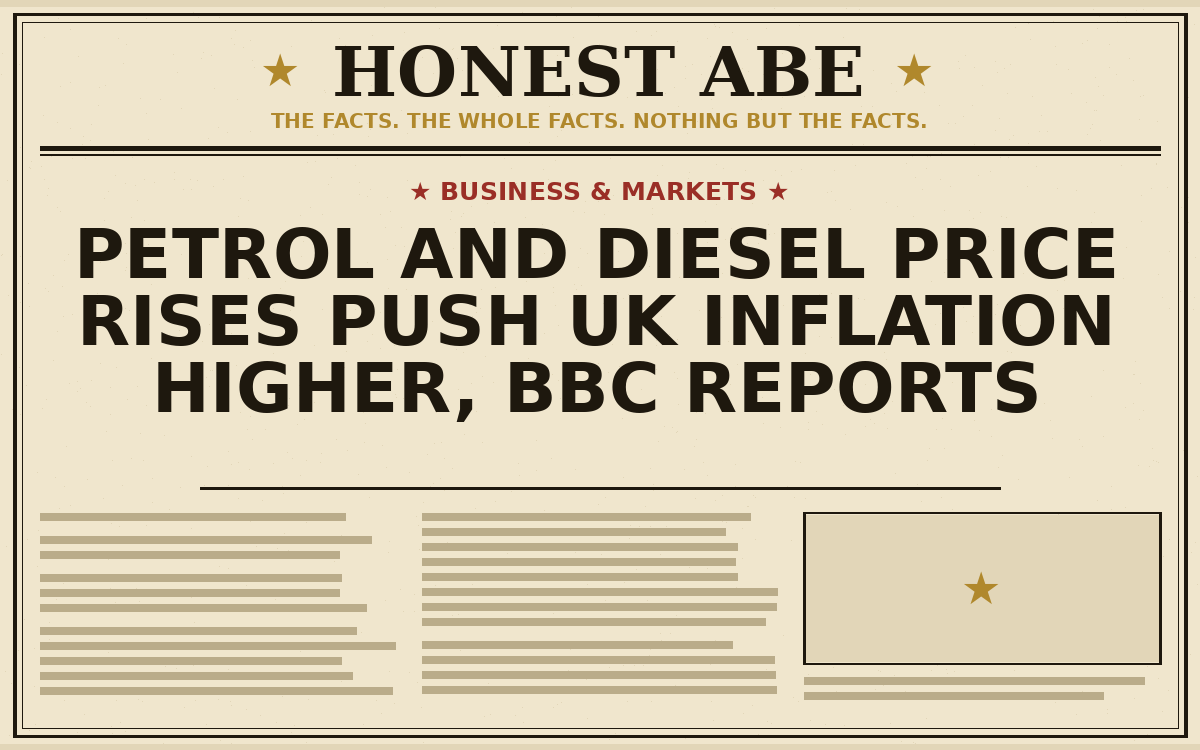
UK inflation rose as petrol and diesel prices climbed, with summer holidays and disruption to global oil supplies from the Middle East conflict cited as drivers, according to the BBC. Specific figures were not detailed in the available report.
Key facts
- The BBC reports UK inflation moved higher on the back of rising petrol and diesel prices.
- Summer holidays contributed to the price growth, according to the BBC.
- Disruption to global oil supplies caused by the Middle East conflict was cited as stoking increases.
- The report was published by the BBC on 16 September 2026.
- Specific inflation figures are not detailed in the available source.
Rising petrol and diesel prices have pushed UK inflation higher, according to the BBC. The increase in fuel costs added to price pressures on households and businesses.
The BBC reported that summer holidays helped stoke price growth, a period that typically sees increased demand for travel and fuel.
Disruption to global oil supplies caused by the Middle East conflict was also cited as a driver of the price rises, according to the BBC.
The precise inflation rate and the scale of the fuel price increases were not detailed in the available report.
Why it matters
Inflation affects the cost of everyday essentials, and rising fuel prices in particular hit both households and businesses that rely on transport. Understanding what is driving inflation helps the public gauge pressure on their budgets.
Frequently asked questions
What caused UK inflation to rise?
According to the BBC, rising petrol and diesel prices pushed UK inflation higher, driven by summer holidays and disruption to global oil supplies from the Middle East conflict.
How did the Middle East conflict affect prices?
The BBC reported that the conflict disrupted global oil supplies, which stoked price growth for fuel in the UK.
When was this reported?
The BBC published the report on 16 September 2026.