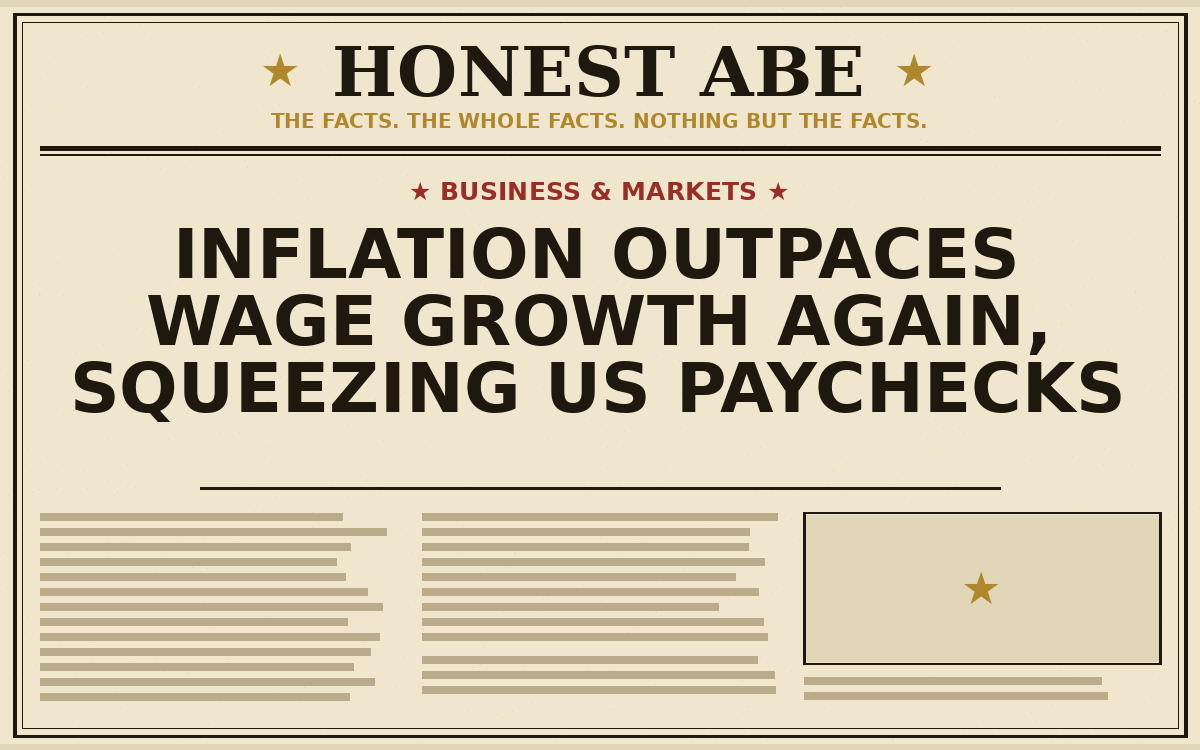
Consumer prices climbed 3.4% over the year in August while wages rose just 3.1%, meaning inflation is once again eating into Americans' take-home pay, according to CNBC.
Key facts
- Consumer prices rose 3.4% over the past year in August, per CNBC.
- Wages increased 3.1% over the same period.
- Inflation is outpacing wage growth, reducing purchasing power.
- The gap squeezes Americans' paychecks in real terms.
Inflation is once again rising faster than wages, putting fresh pressure on American households, according to CNBC. In August, consumer prices increased 3.4% over the past 12 months, while wages grew just 3.1% over the same period.
The 0.3 percentage point gap between prices and pay means that, in real terms, many workers are seeing their purchasing power shrink even as their nominal earnings rise. When prices climb faster than paychecks, the same dollar buys less at the store, the gas pump and elsewhere.
The dynamic marks a return to conditions in which inflation outpaces wage gains, a squeeze that can be felt across everyday spending. CNBC reported the figures as evidence that Americans’ paychecks are again being stretched.
For households already managing tight budgets, even a modest gap between price increases and wage increases can compound over time, gradually reducing the amount of goods and services a family can afford on the same income.
The report frames the issue in straightforward terms: prices are rising, wages are rising more slowly, and the difference lands on consumers. Beyond the headline percentages, CNBC did not detail additional data in the material provided.
Why it matters
When prices rise faster than wages, workers effectively earn less even if their paychecks grow, making it harder to cover everyday costs. The gap is a key measure of economic well-being and often shapes consumer spending, political debate and policy decisions.
Frequently asked questions
How much did inflation rise in August?
According to CNBC, consumer prices rose 3.4% over the past year in August.
How much did wages grow?
Wages increased 3.1% over the same period, CNBC reported, trailing the rise in consumer prices.
What does it mean when inflation outpaces wages?
It means prices are rising faster than pay, so workers' purchasing power falls and the same income buys fewer goods and services.